“Let Me Tell You What the Story Is.”

In a few days, I asked again about God’s story.

The story begins with creation, the evolution up to life, animals, early man.  Then to the very ancient communications that require language and memory.

They (My communications) occurred rather simultaneously, and each communication was tailored to and by the recipients.  So the precise sequence for telling My story is more a question of narrative strategy than of accuracy or significance.

“But I will have to tell a story that makes sense.”

That makes sense to whom?  Let Me tell you what the story is.  I am burgeoning forth, reaching out to matter, plants, animals, activating their interiority, giving them direction.

As I have explained, I grew as a Self in response to the interiority of others, and I wanted to communicate, interact, more fully and at a higher level.  This (communication) is somewhat possible with early man, who recognized My presence in nature, in life, and also heard, if somewhat dimly and inchoately, My other promptings such as conscience, (the sense of) right and wrong, fine sensibility, appreciation of nature and beauty, love amongst creatures, and mystical union.

“The Soul’s will is the will of God.”


I tried to step back to see what question my “soul” would ask. “How can I merge with You? I’m not sure if that’s the best way to put it, Lord: be at one with You, at rest with You, at one with Your will?”

The question is adequately formulated. The goal—one way to describe the goal—is to be at one with God, the God of All. At bottom, the Soul’s will is the will of God. The Soul is at one with God.

It is not that you and I are literally the same substance, the same particular. It is that we are “at one,” in perfect harmony, and not accidentally so. It is in the nature of what the Soul is, that it is at one with God. Remember that these metaphysical (philosophical) categories are crude and inadequate in the first place.

Back to your question: how can you become at one with God? Of course, the answer is that you already are—your Soul, that is. The task is to come to realize that this is so, to realize it not merely in theory, but in intuitive, felt understanding, in your emotions and feelings, and in practice.

“That’s the goal, Lord? It sounds simple. The one-ness is already inside. All we have to do is to bring our conscious selves along.”

That is right. It is the simplest thing in the world. And everyone, at some level and at some moments, knows it, at least glimpses it. But it is very difficult to actualize in practice. The empirical world—the world of desires and the senses—seems so real and is so powerful that is extremely difficult to redirect one’s energy.

And the empirical world is real, in its own way. The world is not an illusion, a mirage. If it is a mirage, it is one from which you can drink water. No, you must respect the empirical world while at the same time emancipating yourself from it, not letting yourself be identical with your interests in this world.

So the world of our experience (and desire) is quite real—it is the arena in which we live our lives and loves, joys and sorrows. In spite of that, we should not let ourselves be ensnared by it.

Like Two Singers Doing a Harmony

“Yes, I always think of You ‘pushing’ me, rather than my being ‘drawn’ to You.  I respond to orders rather than seeking union.”

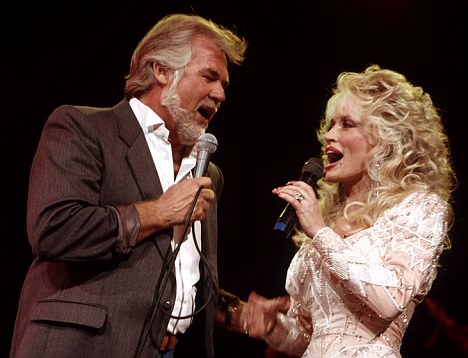
That is good.  The shallow seeking of union with Me is a delusion.  The goal is to be “in tune” with Me.  The work will flow from that.  This is not just a matter of doing your duty.  It is coming into alignment with Me—like two singers doing a harmony.

I Did Not Feel Ineffable

Mysticism is often considered the highest level of religion, but for a long time, there were no mystics.

God was interacting with people in many ways, but not through mystical union.  Then the first mystic seers appeared.  In prayer, God explained,

Now people were coming to me—not in limited ways, praying and offering sacrifices and so forth—but in a kind of merger … they were entering into Me, and I was receiving them.  That was a new experience.

“So You responded?”

It is hard to explain.  It’s like suddenly finding that you are the natural home for these creatures … the bosom or womb or home or ocean that all return to.  That is no more important a part of My nature than others we have discussed, but it is important … 

And then another thing happened.  Much more than before, these sages began to ponder My nature and (to) try to articulate their understanding of it.

And two changes occurred as a result.  First, for the first time, I was an object, to be defined and analyzed.  It is like your first experience with a psychologist who has a lot of boxes to put you in (introverted, repressed, etc.).  As God, I had not pondered My own “nature.”  I had no need to “define” Myself, but the effort of others to do so had an impact … 

It came clearer that I was an object to others, a source of puzzlement, even mystery, to them.  In fact, they would say that My nature was ineffable, beyond all language, all logical categories.  They would describe Me in paradoxes—neither existent nor non-existent, and so forth.

And this has an impact.  I did not feel ineffable.  To be sure, I am hard to describe and human concepts are not adequate, but that is true of the physical universe as well.

“You say it has an impact?”

It creates a problem.  It puts a barrier between Me and My creatures.  How can they approach the ineffable?  And even that mystical aspect leads them to regard Me as a pea-soup they want to dive into.

It did leave Me with a problem:  how to break through the fog ….

“Then mystical union is not the goal?  The purpose is to live the life you’re given?  Is that right, Lord?”

Yes!


“Are you going to take the voice seriously?”

“Are you going to take the voice seriously?”

The historian Paul Johnson writes in his spiritual memoir about having once called the prime minister’s office and, instead of getting the secretary’s secretary, the prime minister herself answered. “It happened to me once with a prime minister,” Johnson writes. “But with God it happens all the time.”

I don’t know if Johnson’s experience is like mine, but from that day on, when I prayed, I almost always received a verbal response, often with quite specific guidance. At first, it just seemed an oddity that went too much against my agnostic worldview to be taken seriously. Once my son had classical music playing in his ear all the time. It turned out to be an ear infection, causing buzzing signals that his brain skillfully translated into Mozart. Maybe my prayers were like that.

I would tell Abigail about these odd experiences. While I always disdained paranormal reports, near death experiences, and the like, she did not. I assumed she put the voice in that category. I didn’t really know because, usually, she just took in what I told her and didn’t say much. She explained to me later that she thought I was engaged in a sensitive communication and did not want to create static.

Then, one day, she did speak up. “Are you going to take the voice seriously, or is this just entertainment?”

She had put her finger on the contradiction I was living.

The voice was too real and benign and authoritative to ignore. Yet I could not imagine acting on it. Well, actually I could and did act on it, but without taking it seriously. I would be told to do this or that. Sometimes the guidance was about some matter facing me that day, and following the guidance usually worked out pretty well. Other times I received arbitrary directives which, since harmless, I followed. For example, one morning, Abigail and I had just sat down to breakfast when I was told,

Don’t eat.

So I just sat there for maybe fifteen or twenty minutes.

You can eat now.

I always did as I was told, but it was still more like a game of Captain-may-I than a life imperative. I was not ready to answer Abigail’s question.

On a visit to Boulder, where I used to teach, I told a former colleague about my experiences. I was afraid he would think, “poor Jerry, he has gone daft.” But he listened with interest, and recommended that I read American philosopher William James’s classic essay, “The Will to Believe.” An influential British scientist had declared, as a principle of the ethics of belief, “It is wrong, always, everywhere, and for every one, to believe anything upon insufficient evidence.” The scientist had religion in his crosshairs.

James responded that there are some beliefs that, if you accept them, will shape your whole life. And shape it in a different way if you do not. You cannot remain neutral; yet evidence is inconclusive either way. You just have to decide which belief you would rather live with.

My situation seemed to be exactly what James was describing.

Facing a similar choice between belief and unbelief, the seventeenth-century philosopher Blaise Pascal, had seen it as a wager. If I believe in God and am wrong, well, I’m dead anyway, so I haven’t lost much. But if I don’t believe in God, and there is one … well, you might say, there’s hell to pay.

I faced my own wager. Either I follow the voice or I don’t. If I follow the voice and it is not divine, what is the worst that can happen? Well, I would be a fool, maybe a laughingstock, and would say goodbye to an excellent career. But, if I decide not to follow the voice and it is divine, then I would have missed my purpose in this life. What if Moses had done that? Or George Fox, the founder of the Quakers? The Old Testament is full of people called by God, who at first demur and only reluctantly heed the call. Even Moses worries (“suppose they do not believe me”) and feels inadequate to the task (“I have never been eloquent … I am slow of speech and slow of tongue”).

I am not comparing myself to these great religious leaders, but all of us in our lives face moments when we have to decide whether to respond to a certain call—be it the call of duty or service or simply, as Joseph Campbell puts it, to “follow your bliss”—rather than continue a more conventional or comfortable course. If I had to live with one worst-case scenario or the other, I could live with being a fool, if that’s what it came to, but I could not live with having refused God’s call.

Making a decision to believe is not quite the same as accepting that belief in your bones.

It is more like the first step toward believing. My philosophy still had no place for God—especially for a God who talks to me. Outside the Bible, who talks to God?

Another notable book by William James, The Varieties of Religious Experience, helped answer this question.

The founder of pragmatism, the only distinctively American school of philosophy, James also taught physiology and psychology. He was a man of science but, for him, empiricism did not mean restricting our understanding to what science registers. He looked without prejudice at all kinds of human experience. He talks about famous people such as George Fox as well as ordinary people who have received answers to prayer or psychic intuitions or visitations from recently-departed family members.

Many people have had moments of divine or non-natural awareness, probably more than feel comfortable talking about them publicly.

Duke English professor Reynolds Price writes about his own battle with cancer. During the course of his treatment, he had an encounter with Jesus in a vision or, as it seemed to him, in another dimension. After he published his story, he received letters from many people with similar experiences—experiences that they had never told anyone. My experience was not as out-of-line as I had thought.
I decided to follow the voice and see where it would lead me.

“The goal is to be ‘in tune’ with Me”

In Tune With God:

I had now accepted the assignment, but God wanted more.

You need purification. Transformation is a good word. It is obedience, which at its fullest is transformation.

“What does that involve, Lord?”

Putting Me first rather than last. Living every moment, making every decision, in response to My call.

“How do I go about doing that?”

You know this—start every day with prayer and let prayer guide you through the day.

There is another way to listen to God. One day, when I was fatigued from travel, I was told to take a day to rest.

“But I have so much work to do, Lord.”

Always listen to your body—it is also My voice.

I have not found it easy to live my life fully in tandem with God. Every day there are items on my personal radar, and I usually attend to them first, and fit God in when I have a chance.

One morning Abigail called breakfast and I held off, due to one of God’s seemingly arbitrary commands. “Is my husband becoming a holy man?” she asked with more exasperation than reverence. “I already am,” I said, in the sense of having a divine call, “just a very bad one.”

“Lord, I know I should try to live each day in response to Your purposes.”

That is right. Not just to do it mechanically, like a soldier following orders, but to do it as an organic flow, wishing to be in touch with Me and to live in accord with My will, My love.

“Yes, I always think of You ‘pushing’ me, rather than my being ‘drawn’ to You. I respond to orders rather than seeking union.”

That is good. The shallow seeking of union with Me is a delusion. The goal is to be “in tune” with Me. The work will flow from that. This is not just a matter of doing your duty. It is coming into alignment with Me—like two singers doing a harmony.

“Pure energy, pure creative force, pure Being…”

Pure energy:

Later I was told more about God at the Beginning.

Before I was a Person, I was around “for a long time.” 

First there was Nothingness, not just empty space—there was no space and time either.  Out of Nothingness I erupted, “created” Myself. 

“At that point, I was just pure energy, pure creative force, pure Being, Being itself. 

Space and time were created as a result of my Being.  They were the frames of My existence.  The physical universe spun out of Me by My overflowing. 

“I am the to-be of all things… not yet a Person… not yet self-aware.  I was amorphous energy flowing out radically in all directions. 

(Before Creation) I am pure spirit, sufficient unto Myself, and have no “body.”  And I did not exist in a world with physical bodies. 

“I felt I was lacking something—grounding, facticity, the blunt materiality, the standing-against, the hard edge to push oneself against, the resistance and friction that physical objects have.  So, out of my Being, a world was spun.”

________

Listen to more about God and energy on God: An Autobiography, The Podcast. The dramatic adaptation and continuing discussion of the book God: An Autobiography, As Told To A Philosopher by Jerry L. Martin.