How to Pray for Guidance When You Don’t Know What to Do

Jerry L. Martin on Discernment, Writing Prayer, and Listening for God

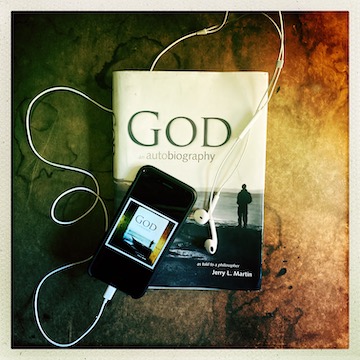
A reader of God: An Autobiography, asked me to pray and get divine guidance for a situation in which he is uncertain how to help a friend. The following is my response:

Dear A.,

I understand why, when a friend is in extremis, you worry over how to be helpful, since, in delicate situations and with unknown factors, one can easily trip over oneself. However, my assignment does not include being a medium. I did that once, putting to God a question asked by a life-long friend. I felt beforehand that God did not want me to play that role. However, I went ahead and asked. God answered but I felt I had done the wrong thing, and I have not done it again.

Let me suggest this. My best method is to sit down with a blank sheet of paper (I never do it at the computer). I put the date at the top and address my question in the following fashion: “Lord, …” (Use whatever mode of address feels most natural to you.) Even though God presumably knows these things, I state the gist of the facts and also my own feelings about the situation. If I follow up with something vague like “Lord, do you have anything to tell me about this,” I often get the response, “What is your question?” Prayer always works best if I ask a particular question.

Try this yourself. And then write down whatever comes to you. It need not be a voice, but may be more like automatic writing. Don’t edit it yourself as you go along, as if you could anticipate God’s answer. Proceed on the assumption that there is some divine element in what comes to you. If you have a follow-up question, go on in the same fashion, as long as you have genuine, honest questions.

If the answers you receive don’t make sense or seem completely wrong-headed (“That can’t be right!”), then tell God that and see how God responds. If it still seems like a muddle, then wait a day or two and pray about it again.

There is nothing guaranteed in this way of praying but, if you make it a practice, you will get better at it and establish a better connection between yourself and God. And this will be a blessing!

Warm good wishes,

Jerry

“Everything God has spoken, we will do.”

God Has Spoken:

One day, after breakfast at a little café in Alexandria, I was told,

Don’t go to work

It seemed to be a training in obedience.

“Lord, do you know we have to get that grant proposal in today?”

Of course.

My organization lived on grant money. But the voice said not to go in. What to do? Well, the sky is not going to fall if the proposal goes in the following day. I would go back to my apartment.

As I turned on the ignition, the voice spoke again.

You can go to work now.

I remember that incident because something was at stake, but usually I was told do something trivial, such as to listen to a different radio station or sit in a different chair. As these arbitrary commands continued—mounted as it seemed—Abigail expressed concern.

This sounded more like Boot Camp than spiritual guidance.

Maybe I shouldn’t do everything I was told. Maybe I should, as she put it, “use your intelligence.” I was puzzled. Was I supposed to second-guess God?

The next day I stopped at Border’s bookstore near Pentagon City. On the way out, I felt guided to move in a particular direction, like a dowser following his stick: first straight ahead, next to the right, then straight ahead, now stop. I was at the religion section. I felt guided down to the third shelf on the right, and finally to a particular book.

It was a book I never would have chosen on my own: John Calvin’s commentary on the Gospel of John.

I know that Calvin is one of the great theologians of the modern era, but I had an impression of him as stern and rigid. I picked up the book and it opened to John 8:28, where Jesus says, “I do nothing on my own.”

Calvin explains that “Christ wants to prove that he does nothing without the Father’s command … he depends entirely on his will and serves him sincerely … he does not just partially obey God, but is entirely and without exception devoted to his obedience.” It was a lesson in obedience.

Near the register, there was a display with another book I never would have bought on my own: The Ten Commandments, by Dr. Laura Schlesinger and Rabbi Stewart Vogel. Many people like Doctor Laura but the few times I had heard her on the radio, she seemed harsh rather than loving. I believe in tough love, but she just sounded tough. However, I opened it and my eyes fell on a line bold-faced in the text. It is where the people of Israel accept the covenant: “Everything that God has spoken we will do!” Another example of total obedience.

I had been led to one other passage in Calvin’s commentary. John 9:4 says, “We must work the works of him who sent me while it is day; night is coming when no one can work.” Calvin comments, “as soon as God enlightens us by calling us, we must not delay, in case the opportunity is lost.”

The note of urgency reminded me of the story a village chief in eastern Brazilia told of his own encounter with a divine being.

He had encountered the being while out hunting, but was too scared to speak and the being left.

“At night while I was asleep he [the divine being] reappeared to me. … He led me some distance behind the house and there showed me a spot on the ground where, he said, something was lying in storage for me. Then he vanished. The next morning I immediately went there and touched the ground with the tip of my foot, perceiving something hard buried there. But others came to call me to go hunting. I was ashamed to stay behind and joined them. When we returned, I at once went back to the site he had shown me, but did not find anything any more.”

He had missed his moment. I did not want to miss mine.