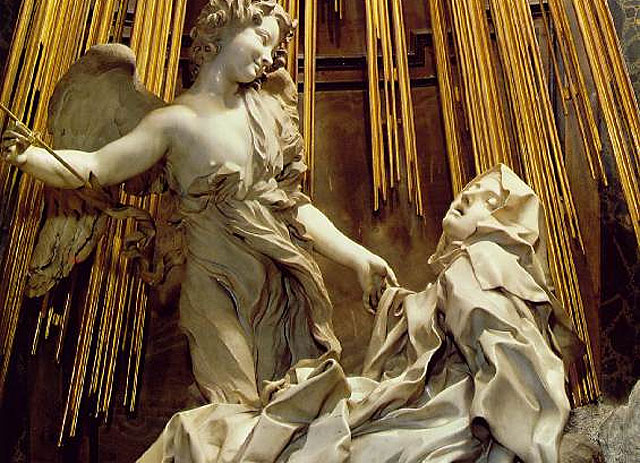
Mysticism is often considered the highest level of religion, but for a long time, there were no mystics.
God was interacting with people in many ways, but not through mystical union. Then the first mystic seers appeared. In prayer, God explained,
Now people were coming to me—not in limited ways, praying and offering sacrifices and so forth—but in a kind of merger … they were entering into Me, and I was receiving them. That was a new experience.
“So You responded?”
It is hard to explain. It’s like suddenly finding that you are the natural home for these creatures … the bosom or womb or home or ocean that all return to. That is no more important a part of My nature than others we have discussed, but it is important …
And then another thing happened. Much more than before, these sages began to ponder My nature and (to) try to articulate their understanding of it.
And two changes occurred as a result. First, for the first time, I was an object, to be defined and analyzed. It is like your first experience with a psychologist who has a lot of boxes to put you in (introverted, repressed, etc.). As God, I had not pondered My own “nature.” I had no need to “define” Myself, but the effort of others to do so had an impact …
It came clearer that I was an object to others, a source of puzzlement, even mystery, to them. In fact, they would say that My nature was ineffable, beyond all language, all logical categories. They would describe Me in paradoxes—neither existent nor non-existent, and so forth.
And this has an impact. I did not feel ineffable. To be sure, I am hard to describe and human concepts are not adequate, but that is true of the physical universe as well.
“You say it has an impact?”
It creates a problem. It puts a barrier between Me and My creatures. How can they approach the ineffable? And even that mystical aspect leads them to regard Me as a pea-soup they want to dive into.
It did leave Me with a problem: how to break through the fog ….
“Then mystical union is not the goal? The purpose is to live the life you’re given? Is that right, Lord?”
Yes!