Ask me a theological question.
I now knew that there was a God, and I knew a bit about Him (or Her). But, for all I knew, there might be other gods as well. It might seem surprising that I would entertain such an idea. It’s usually assumed that, if there is a God, then it is a monotheistic God and it has the traditional set of characteristics.
But I had not believed in God, and I did not have a worldview that had room for a God, either traditional or otherwise. My agnostic worldview had no room for any kind of “supernatural” beings. So, if there was a God after all, as I now believed, it was a wide open question what God was like. One God, many, gods, an infinite god, a finite god, and on down the list—all were equally improbable and therefore equally possible. I had become radically open-minded.
So I asked, “Lord, are there many gods?”
Yes.
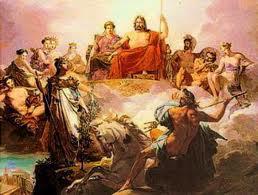
Okay, I had asked but, in spite of my vaunted open-mindedness, I did not like the answer at all. It was hard enough to believe in God. Was I now supposed to believe in Zeus and Odin?
“Lord, please explain that answer.” I hoped He would explain it away.
Remember that your concept of identity is not very helpful in these things. But there are many gods.
I had heard various theories of multiple gods, so questions tumbled out. “How do they relate? Is there a hierarchy of gods? Is there one highest or encompassing divinity? That would be at least quasi-monotheistic.”
Your questions involve so many false (crude) assumptions that it is difficult to answer.
I found that irritating. They seemed like good questions to me. I put the issue aside for the moment but, a few days later, I asked again. “Lord, is there only one God?” I was hoping for a different answer.
No, there are many gods.
Maybe “god” was being used in an unusual way. “Lord, what do You mean by ‘god’?”
Divine beings, holy beings.
“But You said You were the God of All.”
I am also the God of Many.