There is another way to listen to God. One day, when I was fatigued from travel, I was told to take a day to rest.
“But I have so much work to do, Lord.”
Always listen to your body—it is also My voice.

There is another way to listen to God. One day, when I was fatigued from travel, I was told to take a day to rest.
“But I have so much work to do, Lord.”
Always listen to your body—it is also My voice.

“Lord, is the theory of evolution correct?”
It is not a bad theory. It is a short-hand that works, but it leaves out the most interesting part of the story. It is like behavioral psychology in this respect.
While Pavlov’s dog salivating tells you something about animal and human behavior, seeing people solely through the lens of stimulus-and-response conditioning leaves out what is really interesting about them. Similarly, the theory of evolution is okay as far as it goes, but leaves out the best part of the story.

“And so, Lord, You call forth the first human beings?”
Yes, the first inklings, forerunners, of man. The great apes are wonderful creatures, full of intelligence, energy, and drive. But it is frustrating to interact with them. They are so close and yet so far from having full interactive personalities. They have teleological urges but they are only effective, for the most part, at the biological level. Their social life is rudimentary and their spiritual awareness is diffuse and inarticulate. They lack a symbolic order. They can’t project ideals beyond the sensual. They can’t respond to Me either.
“But they evolved?”
The transition to early man is both slow and sudden. Remember what the first two years of a child’s life is like, and (then) imagine each day to be a century. In a sense, nothing is happening. One day looks much like the last, and there is no single great leap forward.
So imagine My excitement when the first protohumans arrived. At first, you couldn’t tell them from animals but I could see their potential. They didn’t have language but their sounds and marks had representative purposes. They could connect one thing to another, one thought to another. They could remember their past and replay it in their minds. They slowly developed a sense of the future.

“Lord, I have the feeling that you want me to read and think less, and to listen more and just write down your story.”
Don’t stop thinking, but think in a different way. Don’t work so hard to figure everything out, to make it rational, to make it fit your categories. Just listen and think through the implications of what I tell you.
“But, Lord, some of what I learn from You comes from worrying over what you say.”
Sometimes yes, but often no. Sometimes your questioning just gets in the way. The main point is to open your mind, to try to understand what I am saying on its own terms, and to see ways it might be true or understandable to you.
When philosopher Jerry L. Martin heard God speaking to Him, people said – Really?
A real Voice? What does God sound like?
Experience God: An Autobiography
Watch my other Videos – HERE or on my YouTube Channel.
God: An Autobiography, As Told to a Philosopher – is the true story of a philosopher’s conversations with God. Dr. Jerry L. Martin, a lifelong agnostic. Dr. Martin served as head of the National Endowment for the Humanities and the University of Colorado philosophy department, is the founding chairman of the Theology Without Walls group at AAR, and editor of Theology Without Walls: The Transreligious Imperative. Dr. Martin’s work has prepared him to become a serious reporter of God’s narrative, experiences, evolution, and autobiography. In addition to scholarly publications, Dr. Martin has testified before Congress on educational policy. He has appeared on “World News Tonight,” and other television news programs.
________
Listen to this on God: An Autobiography, The Podcast– the dramatic adaptation and continuing discussion of the book God: An Autobiography, As Told To A Philosopher by Jerry L. Martin.
He was a lifelong agnostic, but one day he had an occasion to pray. To his vast surprise, God answered- in words. Being a philosopher, he had a lot of questions, and God had a lot to tell him.

So that is what the new Elijah, the new messenger, is about. But telling the world that I am the new Elijah? “Lord, I am back to the laughing stock problem.”
There is no point in writing something that will be dismissed. You will need to continue reading and studying—otherwise, you will not have adequate words and concepts. There is a reason I chose an educated man for this task.
You will carry it forward. Do not credit this to your ego—it will be My voice. (Just) focus on the task. The world’s religions have spent themselves. They need renewal. There will be many voices for renewal. Yours will be one of the most important.
“I would feel more comfortable being one of the less important.”
God: An Autobiography, As Told to a Philosopher – is the true story of a philosopher’s conversations with God. Dr. Jerry L. Martin, a lifelong agnostic. Dr. Martin served as head of the National Endowment for the Humanities and the University of Colorado philosophy department, is the founding chairman of the Theology Without Walls group at AAR, and editor of Theology Without Walls: The Transreligious Imperative. Dr. Martin’s work has prepared him to become a serious reporter of God’s narrative, experiences, evolution, and autobiography. In addition to scholarly publications, Dr. Martin has testified before Congress on educational policy. He has appeared on “World News Tonight,” and other television news programs.
________
Listen to this on God: An Autobiography, The Podcast– the dramatic adaptation and continuing discussion of the book God: An Autobiography, As Told To A Philosopher by Jerry L. Martin.
He was a lifelong agnostic, but one day he had an occasion to pray. To his vast surprise, God answered- in words. Being a philosopher, he had a lot of questions, and God had a lot to tell him.

Enter My heart:
It all seemed intolerably bizarre. I thought I should talk it over with the wisest people I knew. One, a distinguished medical ethicist, responded, “First of all, this is not weird.” Nothing he could have said would have been a greater relief to me! Another, a well-known author, said, first, “That’s great—now you know there is a God,” and then added, “You have had a Kierkegaard moment,” recalling that philosopher’s question, “If you encountered Jesus on the streets of Copenhagen, would you follow him?” A prominent lay theologian said he was “touched” by my story and suggested some reading while I waited for my “big” assignment.
While there were also cautionary responses, no one seemed to think I was crazy or a fool to take the voice seriously.
Still, I was not prepared for the next experience.
“Enter God’s heart? This is weird, Lord, and scary, like out-of-body travel.”
For moral support I asked, “Lord, first give me Your love.”
“Then strengthen me, be with me, for this.”
He took my hand, as it were, and led me into the “heart of God.” I had expected it to be an overpowering, perhaps terrifying experience. But it was more like the eye of a hurricane. I was at the center of something vast and powerful, but here it was quiet, calm, and peaceful. I surveyed the things I feared—the end of my career, loss of reputation, financial insecurity, and a book that went nowhere. In that calm that is God, each concern disappeared.
God: An Autobiography, As Told to a Philosopher – is the true story of a philosopher’s conversations with God. Dr. Jerry L. Martin, a lifelong agnostic. Dr. Martin served as head of the National Endowment for the Humanities and the University of Colorado philosophy department, is the founding chairman of the Theology Without Walls group at AAR, and editor of Theology Without Walls: The Transreligious Imperative. Dr. Martin’s work has prepared him to become a serious reporter of God’s narrative, experiences, evolution, and autobiography. In addition to scholarly publications, Dr. Martin has testified before Congress on educational policy. He has appeared on “World News Tonight,” and other television news programs.
________
Listen to this on God: An Autobiography, The Podcast– the dramatic adaptation and continuing discussion of the book God: An Autobiography, As Told To A Philosopher by Jerry L. Martin.
He was a lifelong agnostic, but one day he had an occasion to pray. To his vast surprise, God answered- in words. Being a philosopher, he had a lot of questions, and God had a lot to tell him.

I tried to step back to see what question my “soul” would ask. “How can I merge with You? I’m not sure if that’s the best way to put it, Lord: be at one with You, at rest with You, at one with Your will?”
The question is adequately formulated. The goal—one way to describe the goal—is to be at one with God, the God of All. At bottom, the Soul’s will is the will of God. The Soul is at one with God.
It is not that you and I are literally the same substance, the same particular. It is that we are “at one,” in perfect harmony, and not accidentally so. It is in the nature of what the Soul is, that it is at one with God. Remember that these metaphysical (philosophical) categories are crude and inadequate in the first place.
Back to your question: how can you become at one with God? Of course, the answer is that you already are—your Soul, that is. The task is to come to realize that this is so, to realize it not merely in theory, but in intuitive, felt understanding, in your emotions and feelings, and in practice.
“That’s the goal, Lord? It sounds simple. The one-ness is already inside. All we have to do is to bring our conscious selves along.”
That is right. It is the simplest thing in the world. And everyone, at some level and at some moments, knows it, at least glimpses it. But it is very difficult to actualize in practice. The empirical world—the world of desires and the senses—seems so real and is so powerful that is extremely difficult to redirect one’s energy.
And the empirical world is real, in its own way. The world is not an illusion, a mirage. If it is a mirage, it is one from which you can drink water. No, you must respect the empirical world while at the same time emancipating yourself from it, not letting yourself be identical with your interests in this world.
So the world of our experience (and desire) is quite real—it is the arena in which we live our lives and loves, joys and sorrows. In spite of that, we should not let ourselves be ensnared by it.

In spite of the voice, I wondered why, most of the time, God is irritatingly elusive. But I was told,
You see Me all the time.
I looked around and tried to see God, but nothing registered. Martin Buber talks about saying Thou to nature, and that was about as close as I could get. If God wants to be so coy, why does He bother to get our attention at all? How, I asked, could our response possibly matter to Him?
It is very important. It is at the heart of my being.
Human recognition is at the heart of God’s being? I found that intriguing, but it only heightened the paradox of an invisible God who wants to be seen.
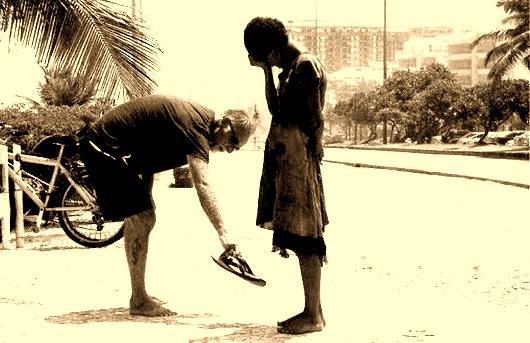
Empty suffering:
Any person who believes in God has to confront the problem of human suffering. Why does God permit it?
“Lord, does suffering have any purpose or meaning?”
“But disease serves no moral purpose.”
Disease, disaster, aging, death are essential aspects of suffering. “We” live in a physically vulnerable world. That is the essential condition that makes life serious.
“All that’s rather abstract, Lord. What exactly does disease do for us?” I thought of Job’s boils.
“But, Lord, that just seems perverse—or cruel.”
Those examples brought back memories.
A couple of years before these prayers began, I suffered a mild heart attack and was rushed to the intensive care unit. They took blood tests, day and night. There are a limited number of places from which blood can be drawn, and the same spot cannot be used again right away. The wrists are ideal, but mine are sensitive and a needle there smarts.
One after another blood drawer would come, and I would plead, argue, wheedle, and insist they find some other place to puncture me. Each resisted, then managed to find a spot.
I was transferred to another hospital for the surgical procedure. I was met by a technician who said his name and stuck out his hand—while looking the other way and standing on my oxygen tube. When it was time to go into the operating room, he snatched away my blanket with so violent a jerk it would have ripped out the intravenous insertion if I had not by now been on high alert.
Medical equipment loomed above, posing an impressive threat. “Don’t move!” I was told. My nose chose that moment to itch. The itch grew intense, then more intense, dreadfully intense, until nothing existed but me and that itch. Then I understood. I can’t fight it…just have to live with it, until the procedure is over. I don’t know if the itch went away or what—I forgot all about it.
I watched the monitor as the surgeon snaked a catheter through an incision in my groin up to a major coronary artery where a stent had to be placed.
Opening an artery is a very serious matter. Bleeding can be life-threatening. The patient has to lie flat and immobile for twenty-four hours. Nurses at my first hospital had been angels in white, but here I was attended by Nurse Ratched’s less charming twin.
Finding it difficult to manage the bedpan flat on my back, I asked for assistance. She acted as if it were a dirty-minded request and responded by threatening me, “If you can’t manage the bedpan, we will catheterize you!” Finally, I did manage, and it was time to close up the artery. Another patient had told me the closing could be dangerous as well as painful.
Nurse Ratched gave me the grim news: young Mr. Sizzorhands, the technician whose previous efforts to hurt me had been foiled, would now have another shot. I asked for someone else. “He is the only technician available.”
“I am not going to let that guy lay another hand on me.”
She made it a battle of wills. We went back and forth. Finally I said, “Let me speak to the doctor.”
She said she would see what she could do and, after a time, she returned with a young Asian-American attendant. He had magical hands. I didn’t feel a thing.
My body was recovering nicely, but the whole experience—starting with “indigestion” in the night (I didn’t know that was a heart symptom), calling the office the next morning to find out what nearby doctor was covered by my health plan, driving myself (fool that I was) to the doctor’s office, filling out forms and waiting for some time before going up and telling the receptionist, “I may be having a heart attack,” the quick examination and discovery that I was at that very moment in the throes of an incipient attack, an emergency medical team rushing to my side trying to head it off, being shoveled into an ambulance, the sirens, intensive care, the surgery, the whole ordeal—left me feeling fragile, as if I were made of spun glass. A sharp tap and I would shatter.
“How so, Lord?”
God: An Autobiography, As Told to a Philosopher – is the true story of a philosopher’s conversations with God. Dr. Jerry L. Martin, a lifelong agnostic. Dr. Martin served as head of the National Endowment for the Humanities and the University of Colorado philosophy department, is the founding chairman of the Theology Without Walls group at AAR, and editor of Theology Without Walls: The Transreligious Imperative. Dr. Martin’s work has prepared him to become a serious reporter of God’s narrative, experiences, evolution, and autobiography. In addition to scholarly publications, Dr. Martin has testified before Congress on educational policy. He has appeared on “World News Tonight,” and other television news programs.
________
Listen to this on God: An Autobiography, The Podcast– the dramatic adaptation and continuing discussion of the book God: An Autobiography, As Told To A Philosopher by Jerry L. Martin.
He was a lifelong agnostic, but one day he had an occasion to pray. To his vast surprise, God answered- in words. Being a philosopher, he had a lot of questions, and God had a lot to tell him.