Skip to content

  • Menu
  • Home
  • About
    • God: An Autobiography
    • Contact | Community
    • Events | News
  • Read
    • God: An Autobiography And More
    • Two Philosophers Wrestle with God: A Dialogue
    • Reviews
  • Listen
    • God: An Autobiography, The Podcast: Buzzsprout
    • Dramatic Adaptation
    • Radically Personal
    • Jerry and Abigail: An Intimate Dialogue
    • What’s Your Spiritual Story?
    • From God To Jerry To You
    • What’s On Our Mind
    • The Life Wisdom Project
    • Two Philosophers Wrestle With God
    • What’s On Your Mind
    • Interviews
  • Watch
  • What Is Your Experience with God?

Tag: God: An Autobiography As Told To A Philosopher

Righteousness

It will guide you to righteousness.

December 22, 2022

Righteousness:

Step through the door love has opened?  The woman I loved was both very spiritual and very Jewish.  Does it mean that I should convert to Judaism—something I had zero interest in doing?  I asked, warily, “Lord, should I become Jewish?”

You already are Jewish.

Already Jewish?  I am not at all Jewish.  The little Texas town where I was born didn’t have any Jews.

“Lord, what do You mean?”

Think about it.

Even more warily, I asked, “Does it mean I have to be circumcised?”

No.

“Does it mean that my religious orientation is more Jewish than Christian or any other faith?”  Certainly the God who spoke to me seemed a lot like the God of the Old Testament.

No.

“Does it mean that I understand, using a phrase of Abigail’s, the Jewish essence?”

It means you are open to the Jewish spirit, it lives in you, and you sometimes listen to it. 

A source of great guidance, inspiration to you.  The center of your being is grounded in it.  It pleases me greatly that you honor the Hebrew scriptures.  They are My word—and they contain the record of many of My dealings with men (people).  Continue to study the Torah.

The Torah, the first five books of the Bible, is also called the Pentateuch or the Five Books of Moses.

It will guide you to righteousness.  Do not falter or be deterred or distracted.  My word is with you.  Make the most of it.

“I will try, Lord.”


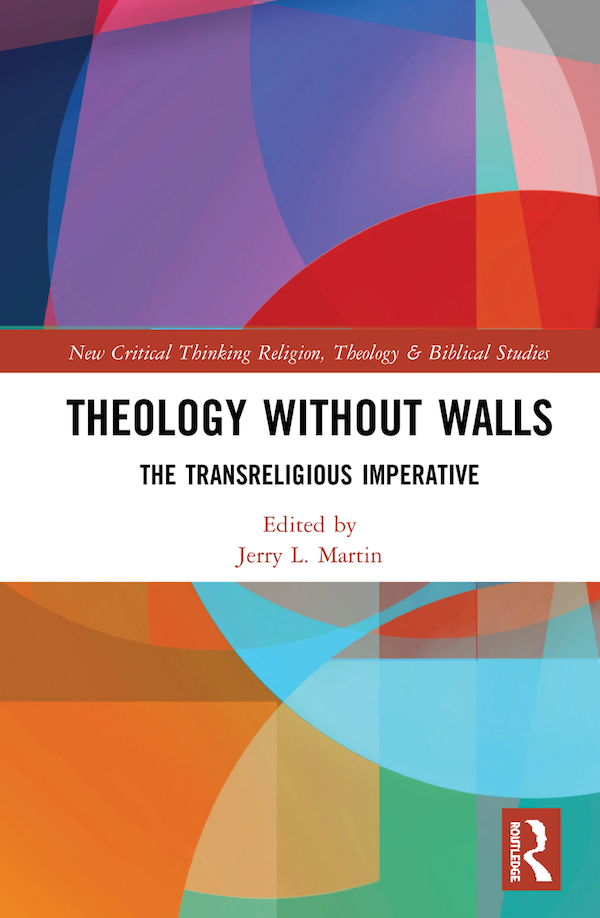
God: An Autobiography, As Told to a Philosopher – is the true story of a philosopher’s conversations with God. Dr. Jerry L. Martin, a lifelong agnostic. Dr. Martin served as head of the National Endowment for the Humanities and the University of Colorado philosophy department, is the founding chairman of the Theology Without Walls group at AAR, and editor of Theology Without Walls: The Transreligious Imperative. Dr. Martin’s work has prepared him to become a serious reporter of God’s narrative, experiences, evolution, and autobiography. In addition to scholarly publications, Dr. Martin has testified before Congress on educational policy. He has appeared on “World News Tonight,” and other television news programs.

________

Listen to this on God: An Autobiography, The Podcast– the dramatic adaptation and continuing discussion of the book God: An Autobiography, As Told To A Philosopher by Jerry L. Martin.
He was a lifelong agnostic, but one day he had an occasion to pray. To his vast surprise, God answered- in words. Being a philosopher, he had a lot of questions, and God had a lot to tell him.

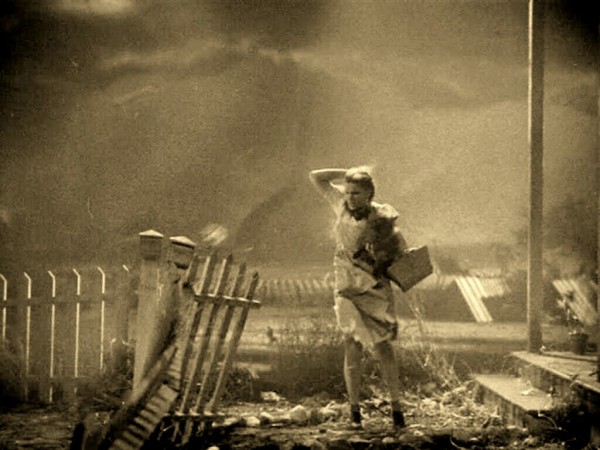
Told anew. I felt like Dorothy from the Wizard of Oz swept up in the whirlwind.

“It is time for it to be told anew.”

December 14, 2022

I had been told,

I want you to tell My story.

Thinking of the Bible, I said, “Lord, hasn’t Your story already been told?”

Yes. It is time for it to be told anew, and not in the same way.

We are entering an unusual time in the history of the world. The old religions are coming apart. Yet there is a renewal of religious spirit. Many of the great religions rested on a relatively clear reception of messages from Me. The new spirituality does not. It is aimless, made-up, impressionistic, psychologized, sometimes flaky and even dangerous and demonic. Not all “spiritual” forces are from God. Some are evil or distorted. A purity of message must be regained.

There is gain here as well. The old revelations were limited. They fit the understanding of people at the time. The messages were sometimes garbled or misunderstood or distorted over time.

I have evolved since then. There is new information to impart.

There it is again: God evolves.

A long history, has not been chronicled, of My development.

I would like to tell you that story and perhaps have you publish it.

My message is evolving over time.

You will carry it forward. Do not credit this to your ego—it will be My voice. (Just) focus on the task. The world’s religions have spent themselves. They need renewal.

Believe the inspirations I send you. Do not worry about any other standards than communicating correctly what I reveal to you. It may seem crazy to others. It (revelation) always does. This is the courage of the messenger.

I felt like Dorothy swept up in the whirlwind. And poor Abigail, would she be swept up too?

Over dinner, I broke it to her. She just listened, unfazed.

“I felt submissive; it sounded like orders from Above. I thought: Jerry is clearly not making it up. What it means in my life is, of necessity, open-ended. To receive such a directive is to move to a realm or level not foreseeable. It is a blessing.”

_______

God: An Autobiography, As Told to a Philosopher –

is the true story of a philosopher’s conversations with God. Dr. Jerry L. Martin, a lifelong agnostic. Dr. Martin served as head of the National Endowment for the Humanities and the University of Colorado philosophy department, is the founding chairman of the Theology Without Walls group at AAR, and editor of Theology Without Walls: The Transreligious Imperative. Dr. Martin’s work has prepared him to become a serious reporter of God’s narrative, experiences, evolution, autobiography and sparks of wisdom.

________

Listen to this on God: An Autobiography, The Podcast– the dramatic adaptation and continuing discussion of the book God: An Autobiography, As Told To A Philosopher by Jerry L. Martin.

Reporting the story

“Tell My story as I tell it to you”

December 2, 2022

Tell My story:

“Lord, what exactly is my assignment?”

The world needs to understand My story, or at least to understand it better.

I have given parts of the story to different people at different times. The whole now needs to be told. Your effort will be part of telling that whole story.

“Do You want people to piece the whole together out of the parts?”

What I most want is for people to listen to Me.

“And to listen to what You have told various people over the ages?”

Yes, that is part of listening to Me.

“What exactly do You want me to write?”

God: An Autobiography. My story is the history of Me—how I came to be.

“The story of your interactions with various peoples?”

That but not only that. Tell it from My point of view, not the history of people’s experience of God.

“Lord, the total story of Your interaction with people would be too vast.”

No, all history is selective. Use a different word—like episodes—if you like.

But it is history in the sense of being chronological, developmental, and dramatic in some sense. There is a subjective point of view (Myself), intentions and concerns for the future, regrets about the past, and so forth.

“What are the materials for this history? The great religious texts?”

Yes, of course. That is one side of the human-divine (interaction), like hearing one end of a telephone conversation.

So that is one starting point. But there are others as well, and I have been leading you to them—the physical record, the geological record, the biological development, the stars and galaxies, time and creation, and so on.

And I will tell you many things Myself—that is the “new revelation” aspect. Nothing overly dramatic there—I reveal Myself all the time.

“So I should read the scriptures of the major religions?”

Yes, I want you to read the early spiritual history of mankind. I will lead you to which readings. I would like you to pray as you read them and take notes as directed.

I grew up at a time when “man” and “mankind” referred to both men and women, and God spoke to me in my own vernacular.

“Lord, You said I was to tell Your story ‘from the inside out.’ But reading the scriptures is ‘from the outside in.’”

Yes, tell My story as I tell it to you. The only purpose for reading is to give you reference points for understanding My story.

“Lord, if I am going to ‘get into Your head,’ it would be helpful to know what You are up to, what Your ultimate goal is.”

No, your job is not to “get into My head.” Remember, I am telling you what is “in My head.” You are not trying to empathize with a fictional or historical character. You have the living Person right here, and I will tell you.

“But, as I prepare for the work …”

You are making this falsely complicated because you are not trusting Me.

You think you will have to do this on your own by deciphering the cultural forms and so forth. But it is exquisitely simple. You ask Me what you are to read or to study. And then You ask Me what I was up to in relation to what you are reading or studying. And you don’t need to worry about the total compass or overall story, because I will lead you item by item.

“Lord, how should I approach the ancient scriptures?”

Get into the frame of mind for reading the (particular) work. That frame of mind is reverential, quiet, respectful, open-hearted. It does not consist of analyzing metaphors and stories of gods. Just take in what comes to you.

an inconvenient God

“An Inconvenient God” by Jerry L. Martin

July 9, 2021

An inconvenient God:

If God were made-to-order, like something you can buy on the Internet, what kind of God would we pick?

In our modern society, everything is available at our fingertips, so we would probably want a God that makes everything comfortable for us — a convenient God, one who gets us a better job, helps us find a parking place and, when we hurt ourselves, kisses it and makes it better.

A convenient God is a wish-fulfillment God.

That sounds nice, but is that the kind of God we encounter in our lives? Unfortunately, no. While we live in a convenient world, the God who shares our journey is an inconvenient God. We are thrown into rough situations, and our God makes demands on us, such as the Ten Commandments and the Golden Rule.

And the correct response is an inconvenient prayer: “Thy will,” not my will, “be done.”

Therefore, instead of creating a fantasy vision of what a perfect world would be, suppose we start with the real world and ask, in light of its rocky paths, what kind of God is present here? And what divine purpose is served by throwing us into such a world?

***
Real life is filled with drama.
It has ups and downs, loves and losses, triumphs and failures, days we rise to our best and times we fall to our worst. Our lives are like obstacle courses or quests where pits must be avoided and dragons slain.

What could possibly be the purpose of such lives? Any good parent knows. Any good coach knows. Readers of quest tales know. We do not grow from luxury. A convenient God would, like an overprotective parent, save us from learning life’s lessons.

The purpose of our lives is not just ease or pure pleasure or wish fulfillment. As I was told in prayer, “The purpose of life is not to sit in the lap of luxury.” Why not? Wouldn’t that be a great life, one a loving God would want to give us?

Well, ask yourself, would you want your child, at a young age, to win a billion-dollar lottery, to be able to buy whatever and whomever the darling desires, to live in a protective bubble that would keep disease and hurt out? Would that even be a life?

I was told, “Immersion in the world — with its causal networks, its guilty resistance — is necessary for growth. One needs a hard reality to work against. Otherwise, nothing would be serious.”

We grow from adversity, from challenges. Sometimes we learn more from failing than from succeeding. My colleague, the economist Kenneth Boulding, used to say, “Nothing succeeds like failure.” It is failure, he would say, that tells us where the edge of the cliff is.

As a drama, life has a meaning, shaped by how we cope with the ups and downs, how we deal with our own mistakes and the cruelties inflicted on us, and yet remain open to love and hope.

***

When my wife and I got married, we included the 23rd Psalm in the ceremony. While it is usually reserved for funerals, we knew that all of life is a Valley of the Shadow of Death. But throughout it all, God stands with us — whatever we face.

Why is there suffering? I was told in prayer, “Suffering is the law of growth.” We grow only through suffering. Even to love is to suffer.

We talk about a perfect God and expect him to be writing the perfect script, as if everything were programmed from the beginning. My sense is that God doesn’t lay out the story in advance, and have us walk through it like automatons.

We write our own script with God as co-author.

We create our own dramas, with God as partner — when we are paying attention. In prayer, I was told that the world is like an improvisational theater in which God is the director of players who aren’t listening.

A “perfect” world may not even be desirable. Imagine a world without suffering, where no matter what we did, everything turned up roses. It would be a world in which actions had no consequences. It would not be a real world at all, but a hologram world, and we would be hologram people.

Real life is lived in an inconvenient world in partnership with an inconvenient God.

It is a tough life in which God is not overprotective, but is always on our side. When we are in harmony with the divine and enjoying life’s bounty, God rejoices. When we are errant or in pain, God suffers.

Maybe the real world — inhabited by the flawed people that we are — is not convenient for God either. God is part of our drama and we are part of God’s. We are in this together.

I'd love to hear your thoughts on this piece
An Inconvenient God was first published by Tulsa World in 2016.

sparks from God

Sparks

July 9, 2021

Sparks from God:

More Sparks

________

God: An Autobiography, As Told to a Philosopher -  is the true story of a philosopher’s conversations with God. Dr. Jerry L. Martin, a lifelong agnostic. Dr. Martin served as head of the National Endowment for the Humanities and the University of Colorado philosophy department, is the founding chairman of the Theology Without Walls group at AAR, and editor of Theology Without Walls: The Transreligious Imperative. Dr. Martin's work has prepared him to become a serious reporter of God's narrative, experiences, evolution, autobiography and sparks of wisdom. In addition to scholarly publications, Dr. Martin has testified before Congress on educational policy, appeared on “World News Tonight,” and other television news programs

________

Listen to this on God: An Autobiography, The Podcast- the dramatic adaptation and continuing discussion of the book God: An Autobiography, As Told To A Philosopher by Jerry L. Martin.
He was a lifelong agnostic, but one day he had an occasion to pray. To his vast surprise, God answered- in words. Being a philosopher, he had a lot of questions, and God had a lot to tell him.

Sparks are visual insights from God.

“Sparks” from God An Autobiography . . .

November 4, 2020

Enjoy flash insights or sparks from God . . .

Follow on Twitter and Instagram!


sparks from God


sparks from God


sparks from God


sparks from God


sparks from God


sparks from God


sparks from God


Sparks from God…

sparks from God


sparks from God


sparks from God


sparks from God


sparks from God

sparks from God


Open your Eyes sparks from God


sparks from God


sparks from God


sparks from God

…Sparks from God…

sparks from God


sparks from God


sparks from God


More sparks from God…


More sparks from God…


sparks from God

sparks from God


sparks from God

God: An Autobiography, As Told to a Philosopher –  is the true story of a philosopher’s conversations with God. Dr. Jerry L. Martin, a lifelong agnostic. Dr. Martin served as head of the National Endowment for the Humanities and the University of Colorado philosophy department, is the founding chairman of the Theology Without Walls group at AAR, and editor of Theology Without Walls: The Transreligious Imperative. Dr. Martin’s work has prepared him to become a serious reporter of God’s narrative, experiences, evolution, and autobiography. In addition to scholarly publications, Dr. Martin has testified before Congress on educational policy, appeared on “World News Tonight,” and other television news programs

________

Listen to this on God: An Autobiography, The Podcast– the dramatic adaptation and continuing discussion of the book God: An Autobiography, As Told To A Philosopher by Jerry L. Martin.

He was a lifelong agnostic, but one day he had an occasion to pray. To his vast surprise, God answered- in words. Being a philosopher, he had a lot of questions, and God had a lot to tell him.

how to pray

New Video – How To Pray

September 27, 2019

Author Jerry L. Martin, explains how to pray and gives tips to newcomers to prayer. God often answers Jerry in words, but there is a lot more to this deep connection with God!


How to pray:

A powerful, intimate way to connect with God, and it is important to learn how to do it well. Learn to strengthen your relationship with God.

God: An Autobiography, As Told to a Philosopher- is the true story of a philosopher’s conversations with God. Dr. Jerry L. Martin, a lifelong agnostic. Dr. Martin served as head of the National Endowment for the Humanities and the University of Colorado philosophy department, is the founding chairman of the Theology Without Walls group at AAR, and editor of Theology Without Walls: The Transreligious Imperative. Dr. Martin's work has prepared him to become a serious reporter of God's narrative, experiences, evolution, and autobiography. In addition to scholarly publications, Dr. Martin has testified before Congress on educational policy, appeared on “World News Tonight,” and other television news programs

________

Listen to this on God: An Autobiography, The Podcast- the dramatic adaptation and continuing discussion of the book God: An Autobiography, As Told To A Philosopher by Jerry L. Martin.

He was a lifelong agnostic, but one day he had an occasion to pray. To his vast surprise, God answered- in words. Being a philosopher, he had a lot of questions, and God had a lot to tell him.

God centered prayer, is God listening

God Centered Prayer

March 1, 2019

God Centered Prayer

Jerry L. Martin discusses the importance of God centered prayer vs. me centered prayer. Guiding you through steps to connect with God.

https://youtu.be/CCPweFM7HBQ
 

God: An Autobiography, As Told to a Philosopher – is the true story of a philosopher’s conversations with God. Dr. Jerry L. Martin, a lifelong agnostic. Dr. Martin served as head of the National Endowment for the Humanities and the University of Colorado philosophy department, is the founding chairman of the Theology Without Walls group at AAR, and editor of Theology Without Walls: The Transreligious Imperative. Dr. Martin’s work has prepared him to become a serious reporter of God’s narrative, experiences, evolution, and autobiography. In addition to scholarly publications, Dr. Martin has testified before Congress on educational policy. He has appeared on “World News Tonight,” and other television news programs.

________

Listen to this on God: An Autobiography, The Podcast– the dramatic adaptation and continuing discussion of the book God: An Autobiography, As Told To A Philosopher by Jerry L. Martin.

He was a lifelong agnostic, but one day he had an occasion to pray. To his vast surprise, God answered- in words. Being a philosopher, he had a lot of questions, and God had a lot to tell him.

edge of infinity what are we to God

The Edge of Infinity

October 22, 2018

The edge of infinity:

I had read Martin Buber’s I and Thou when I was a college freshman and had not looked at it since then.

But, when I fell in love and realized that she loved me back, the opening words of Part Three came back to me: “The extended lines of relations meet in the Eternal Thou.” Love between human beings has a trajectory toward the divine.

That recollection rekindled my interest in Buber.

Returning from New York, where Abigail still taught, I started reading Maurice Friedman’s highly-praised biography. Buber’s philosophical awakening occurred during adolescence, prompted by “the fourteen-year-old’s terror before the infinity of the universe.”

Buber wrote, “A necessity I could not understand swept over me: I had to try again and again to imagine the edge of space, or its edgelessness, time with a beginning and an end or a time without beginning or end, and both were equally impossible, equally hopeless … Under an irresistible compulsion I reeled from one to the other, at times so closely threatened with the danger of madness that I seriously thought of avoiding it by suicide.”

I stopped reading for a moment and, as the train rumbled on, I pondered the “edge of infinity.”

I was taken over by a powerful image, visual and visceral… felt and saw space at its edges, rushing, expanding outward, unfurling itself with vast force and at almost instantaneous speed, without stop, neither a completed infinity nor merely finite. The vision had a tremendous feeling of life-force, of Being unfurled, bursting forth at reckless speed.

Buber was saved from the brink of suicide by reading Immanuel Kant.

Unsolvable questions arise, Kant argues, from trying to reason about space and time as if they were characteristics of reality in itself. They are really just forms of our experience, he says, or, as a Kantian might put it today, features of our scientific paradigms or theoretical frames. This reassuring view gave Buber “philosophical peace.”

There now came to Buber “an intuition of eternity,” not as endless time, but as “Being as such.”

I moved deeply into myself to get some sense of what this might mean. I felt a great rushing, gushing, like a geyser, welling up inside me and rising up through all tiers of reality, an energy or life-force, creative and growing, but more basic and undifferentiated than these terms suggest, as if it were the very Being of these forces, running through the whole of reality.

It rushed, expanded, created, grew not just outwardly but in a vertical dimension as well, from the primordial base up to the creative spiritual edge.

It was, in some sense, erotic energy from bottom to top, with no level, not even the most elemental, ever eclipsed. The vision ended. I slumped back, breathing hard.

I wondered what it could mean for Being as such to be a Person, a Thou, as surely, from my own experience, God is.

Then it struck me that this rushing Stuff, this force of Being, is also the being of me. And I am a person. So why shouldn’t the rushing Stuff, the Being of—of what?—the World, of Being itself, be a Person writ large?

I don’t mean the World merely in a physical sense, since my own being is not merely that of my body. Similarly, the Being that animates everything could be a Person.

Looking out the window at the passing trees, it struck me that their very leaves are full of Being as such, the Being that is also a Person, and that it made sense for them to be a Thou for me.

And, more remarkably, for me to be a Thou for them. I felt that Being facing Being, not necessarily speaking but simply facing, is what personhood is.

I slumped back again and put the book aside. Later, I read on for several pages. I was struck by how many thoughts that I had received had also occurred to Buber.

He entered a Nietzschean phase with an emphasis on “dynamism” and “a creative flow of life force.”

Later Buber thought eternity “sends forth time out of itself” and “sets us in that relationship to it that we call existence.”

To achieve wholeness as a person, he said, it is necessary to direct the creative force of the Evil Urge, the erotic energy that I had felt to be at the center of Being itself.

I reached Washington and returned to my apartment in Alexandria, then resumed reading.

I had left off with Buber speaking of the quality of “fervor with direction, all the awesome power of the ‘evil urge’ taken up into the service of God, [seventeenth-century visionary theologian Jakob] Boehme’s ‘ternary of fire’ [symbolizing desire] spiraling upward into the ‘ternary of light’ [symbolizing love] without losing any of its power thereby.”

This was “one of the truly decisive moments in Buber’s life”: “overpowered in an instant, I experienced the Hasidic soul,” he writes. “At the same time I became aware of the summons to proclaim it to the world.”

I knew how he felt.


God: An Autobiography, As Told to a Philosopher – is the true story of a philosopher’s conversations with God. Dr. Jerry L. Martin, a lifelong agnostic. Dr. Martin served as head of the National Endowment for the Humanities and the University of Colorado philosophy department, is the founding chairman of the Theology Without Walls group at AAR, and editor of Theology Without Walls: The Transreligious Imperative. Dr. Martin’s work has prepared him to become a serious reporter of God’s narrative, experiences, evolution, and autobiography. In addition to scholarly publications, Dr. Martin has testified before Congress on educational policy. He has appeared on “World News Tonight,” and other television news programs.

________

Listen to this on God: An Autobiography, The Podcast– the dramatic adaptation and continuing discussion of the book God: An Autobiography, As Told To A Philosopher by Jerry L. Martin.

God is all complex God

“God is, in some sense, all. And all is very multiplex indeed.”

June 25, 2018

God is All:

I had been told that God comes different ways to different cultures.

“So any single conception of God will grasp only one of Your aspects?”

Yes, you see the problem.  My nature is quite variegated.  People see one aspect and not another. 

“Lord, are there multiple levels of Being or something along those lines?”

Yes, but don’t interrupt.  The story is much more complex. 

God is not mind or matter, or even mind and matter.  God is, in some sense, all.  And all is very multiplex indeed.  Even physics has not been able to produce a universe of “atoms in the void.”  There are forces, elements, patterns – you need to know more to go on – that go beyond them. 

Then add the kind of stuff the morphic fields’ guy talks about …

Rupert Sheldrake, author of Dogs That Know When Their Owners Are Coming Home, performs scientifically controlled experiments to test different explanations of the uncanny ability of some animals to know what is happening far away.

He found, for example, that even if the owner came home at randomized times, the dog was always waiting expectantly about a half hour in advance.  He found that the dog responded as soon as the owner formed the intention to return home.

Sheldrake compares the results of these experiments to studies of how birds and other animals can find their way home.

Since standard explanations fail, he advances the idea that these communications travel by way of morphic fields, using an analogy with gravitational and magnetic fields to explain the “action at a distance” that is a feature of these situations.

… and those who talk about organized information and the like – primitive though they may be – and you begin to get an inkling.

I found that organized information and complexity are increasingly important concepts, particularly in biology, but also in cosmology and the social sciences.  Traditional science is reductionist, always trying to explain the whole from the action of the parts.

It is also deterministic, seeing one state of affairs as fully predictable from the previous state.  It was widely assumed that this model, which has been particularly successful in chemistry and mechanics, could be used to explain all natural phenomena.

The new theories of organization, information, and complexity challenge this assumption.

The whole—whether a cell, an organism, an ecology, or a universe—has some qualities that the parts do not have and cannot explain.  New phenomena, such as life and consciousness, are emergent properties that cannot be understood in terms of inorganic elements.

In some cases, such as why the organs of the body have the size and location that they have, the whole can explain the parts better than the other way around.  The self-organization of complex systems, their creative responses to their environment, and their emergent qualities are neither fully predictable nor fully explainable by their constituent elements or prior states.

I had been told that God is all, and that all is very multiplex indeed.

These concepts could provide the basis for understanding this multiplexity.


God: An Autobiography, As Told to a Philosopher – is the true story of a philosopher’s conversations with God. Dr. Jerry L. Martin, a lifelong agnostic. Dr. Martin served as head of the National Endowment for the Humanities and the University of Colorado philosophy department, is the founding chairman of the Theology Without Walls group at AAR, and editor of Theology Without Walls: The Transreligious Imperative. Dr. Martin’s work has prepared him to become a serious reporter of God’s narrative, experiences, evolution, and autobiography. In addition to scholarly publications, Dr. Martin has testified before Congress on educational policy. He has appeared on “World News Tonight,” and other television news programs.

________

Listen to this on God: An Autobiography, The Podcast– the dramatic adaptation and continuing discussion of the book God: An Autobiography, As Told To A Philosopher by Jerry L. Martin.

He was a lifelong agnostic, but one day he had an occasion to pray. To his vast surprise, God answered- in words. Being a philosopher, he had a lot of questions, and God had a lot to tell him.

Posts navigation
← Older posts
Newer posts →
Your journey starts here.
BUY THE BOOK

Copyright 2016 - God: An Autobiography by Jerry L. Martin. - All Rights Reserved. - Content may not be used without permission of the author.

Your journey starts here.
Are you ready to go deeper?
Want a FREE preview of the book?
YES!
I can't wait to read more!
Thanks,
maybe later.
Send me the FREE eBook preview!
Your journey starts here.