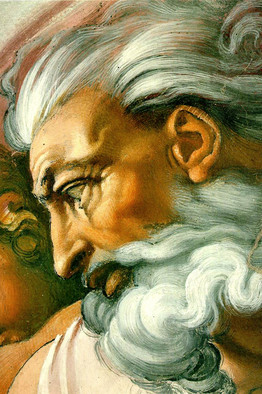
“Lord, you have taken me through a story that is completely unorthodox and embarrassingly anthropomorphic. What am I to make of that?”
I am not interested in what you make of it (or) in conforming My account to your prior, fixed beliefs. Be more specific in your future questions.
I am using literal language because that is the only way to explain the experience of being God.
“But ‘experience’ is also anthropomorphic.”
Not really. I am a Person, but I am not only a Person. I am also much more. There is something you might call “what it is like” to be God. That is what “experience” refers to.
“But, Lord, You are admitting serious limitations as You scramble to create order out of chaos. This is not our idea of God.”
Limitations only from My perspective. Don’t be misled. By your standards I already had unimaginable power and knowledge.
“But You say you knew nothing.”
There is another side to the story. In one sense I knew nothing. But, in another sense, I was viewing everything from another level—as when your senses are confused but your mind is clear and is noting with precision and even analysis the nature and contours of the confusion. Think of waking from a dream while analyzing the fact that you just had a dream.
Or, I suppose, like a researcher taking an hallucinogenic and carefully noting its effects.