How to Pray for Guidance When You Don’t Know What to Do

Jerry L. Martin on Discernment, Writing Prayer, and Listening for God

A reader of God: An Autobiography, asked me to pray and get divine guidance for a situation in which he is uncertain how to help a friend. The following is my response:

Dear A.,

I understand why, when a friend is in extremis, you worry over how to be helpful, since, in delicate situations and with unknown factors, one can easily trip over oneself. However, my assignment does not include being a medium. I did that once, putting to God a question asked by a life-long friend. I felt beforehand that God did not want me to play that role. However, I went ahead and asked. God answered but I felt I had done the wrong thing, and I have not done it again.

Let me suggest this. My best method is to sit down with a blank sheet of paper (I never do it at the computer). I put the date at the top and address my question in the following fashion: “Lord, …” (Use whatever mode of address feels most natural to you.) Even though God presumably knows these things, I state the gist of the facts and also my own feelings about the situation. If I follow up with something vague like “Lord, do you have anything to tell me about this,” I often get the response, “What is your question?” Prayer always works best if I ask a particular question.

Try this yourself. And then write down whatever comes to you. It need not be a voice, but may be more like automatic writing. Don’t edit it yourself as you go along, as if you could anticipate God’s answer. Proceed on the assumption that there is some divine element in what comes to you. If you have a follow-up question, go on in the same fashion, as long as you have genuine, honest questions.

If the answers you receive don’t make sense or seem completely wrong-headed (“That can’t be right!”), then tell God that and see how God responds. If it still seems like a muddle, then wait a day or two and pray about it again.

There is nothing guaranteed in this way of praying but, if you make it a practice, you will get better at it and establish a better connection between yourself and God. And this will be a blessing!

Warm good wishes,

Jerry

Friendship and Meaning During the Pandemic

At the height of the pandemic, Abigail and I braved forth to attend the Eric Voegelin Society meeting in Seattle. Its members are truth-seeking, spiritually open thinkers. As we arrived, attendees were dropping like flies. One scholar, there for a panel discussing his book, reported that every single panelist had reversed course and would be AWOL. It felt bizarre. Sometimes the two of us were almost the whole of the audience.

It did give us a chance to know better the select few who did attend, but also to visit Abigail’s dear friend, Arlene, who goes all the way back to the New York High School of Music and Art. There are, indeed, no friends like old friends. Their conversation was as familiar and lively as if they had spoken just yesterday.

The widow of a distinguished University of Washington professor, Arlene lives in a beautiful, tastefully decorated, culturally rich home. Her eyes sparkle with intelligent vitality. Abigail recounted the many ways Arlene had made a success of life. They talked about friends from yesteryear, some of whom had not.

After their talk wound down, Abigail was delighted to meet her helper, who turns out to be a descendant of the great Indian chief Red Cloud. Abigail loves Indians! They had a great talk. With her, the fact that I have Indian – probably Comanche – blood on both sides is a feather in my headband. But she did not know that when she married me. So I won her on my own!

Small-Town Wisdom, Moral Humility, and To Kill a Mockingbird

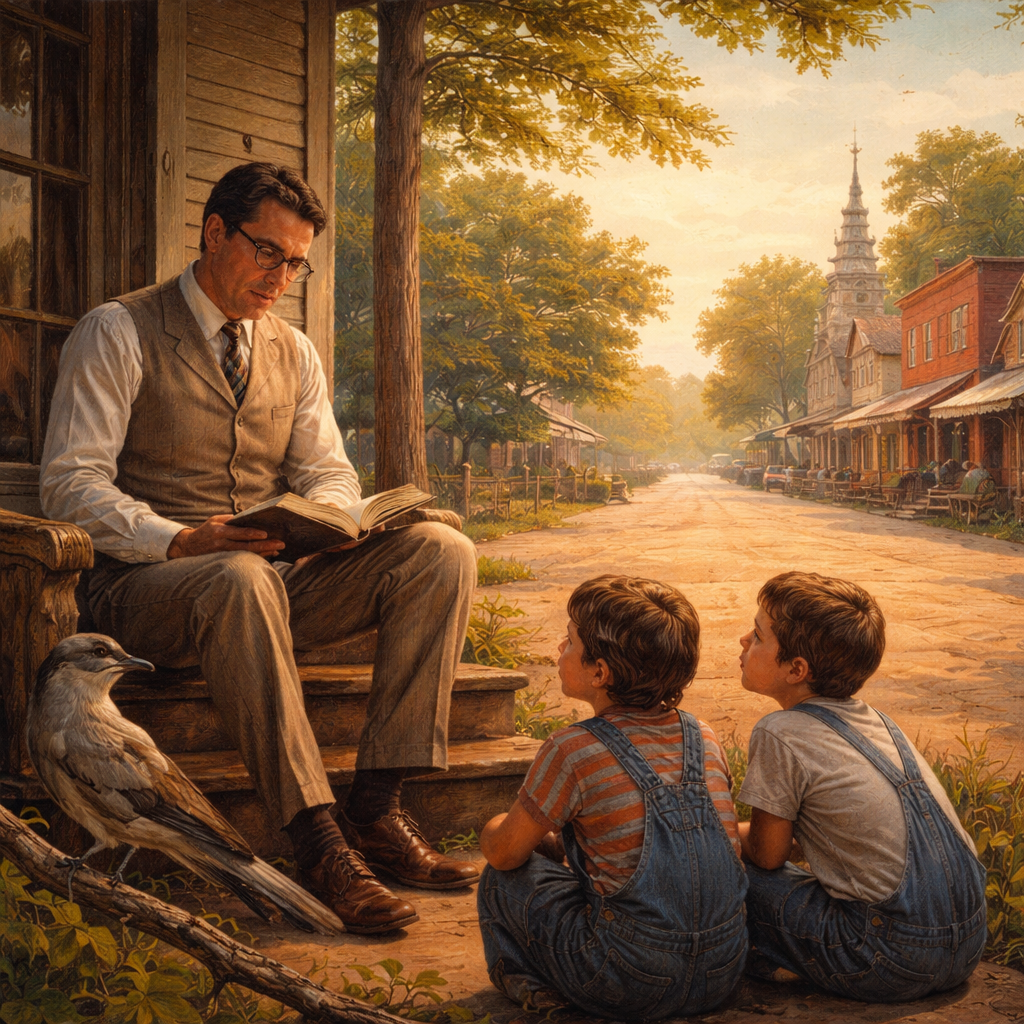
I finally got around to reading “To Kill a Mockingbird.” It is now a staple of the high school curriculum, but it was not in my day. I’m not sure it had been written yet. It is a terrific book that, to my surprise, centers on the ethos of a small Southern town, a place where people have known each other and each other’s families forever. In a larger city, we present one side of ourselves to the people we meet for coffee. In a small town, people see each other in the round. I was born in Turkey, Texas, in the Texas Panhandle. When I would ask my cousin what the population was, he was able to calculate it this way: Well, the McCorkles has twins, and Sally Sue ran away with a travelling salesman, so it is 994. (Today, it is half that. Such are the winds of change. When I visited it a few years ago, my dad asked, “Has it blown away yet?”)

My relatives who lived there were the best folks I have known. They were astute observers of people, events, and, above all, of character. They did not expect anybody to be perfect and they lived prudently with that fact. They knew how to make judgments without being judgmental. “He’ll work hard as long as you are looking,” was typical of this style. They were great story-tellers because small town life, when you know the people in all their lights and shadows, and take a benign view of their peculiarities and peccadillos, is full of stories.

Harper Lee’s novel is like that. It is told through the eyes of two children. When we are kids, we try to make sense of our world. As we grope at understanding, we get it half-right and half-wrong. His sister cannot remember a time when she wasn’t able to read. She is criticized by her teacher for reading “above grade level.” Her brother explains that this is a teacher newly minted by the state university. She believes in the “Dewey decimal system,” which says that, “if you want to know about cows, you don’t read about them, you milk one.”

Their father, Atticus Finch, is an attorney, respected in the community. He is perfectly embodied in Gregory Peck in the movie version. In typical small-town tolerance, he explains that nobody expects a certain family to abide by the rules. Their kids show up the first day of school and never attend after that. The school just marks them down as present. Atticus explains that, with a father who lives on home-brewed liquor and whatever game he can kill (in season or out), everybody just lets them be. In the calm wisdom of Atticus, the novel teaches moral humility. He never looks for a fight, but does not refuse one when it comes his way. In a small town, you mainly avoid and, whenever possible, defuse conflict. But,.when he is asked to defend a young black man accused of assault, he takes the case. And sticks with it, even in the face of an angry mob.

Throughout the book, there are gentle moral lessons – lessons of honesty and decency – but the only explicit teaching is that it wrong to kill a mockingbird, who is just there to sing. Perhaps we are mainly mockingbirds and should be left to sing our own song, in tune or not.

Gate 43 and the Meaning of Greatness

Some of the long flights to California go swimmingly, and some are more like Noah’s flood. Timing is crucial because Abigail has a week of medical appointments starting the next morning. We knew we were in trouble before the flight ever left Philadelphia. Our plane would be leaving late. All they could do was to put us at the top of the standby list for a connection in Dallas. Landing, we raced to the gate of the next flight our way. Not yet taken off, but doors closed. Raced to the next, and then the next, each time trying to win the sympathy of the officials at the desk. Then found a flight with hope and verified that we were still at the top of the standby list. After waiting a bit, the clouds parted and cherished boarding passes were placed in our hands. Oh, the joy of holding those little stiff paper passes! Then we waited and – hmmm – then waited some more. Ut-oh – the pilot and crew had not arrived. (Why had they not known about this sooner?) Once again, wait and hope, wait and hope. Then the news – this flight has been cancelled – and the boarding passes held tight in our hands became pitiless reminders of failed efforts. Would there be any way to get to tomorrow’s medical appointment? Go to the airline office, opposite Gate 43. Raced there. Passed along the way the most interminable line in the history of air transport. One could not actually see where it began or where it ended. It did not seem realistic for us to stand in that never-ending line. There was one more possibility. Find a tender heart who can help. I pushed Abigail in her wheel-chair to Gate 43 and explained our situation. “I have the impression that you have the means to help us,” I said. “Yes, I do,” she said with an impersonal smile. “But that is not my job.” A second earnest plea to her humanity crashed against the same smile. What is that young woman’s goal in life? I wondered. Then the irony struck me. How had the video showed onboard ended? “We hope you have a great flight – because greatness is what we’re going for!” Really?

An Odd Dream About Criticism and Self-Restraint

I had an odd dream. Some guy called me, saying that I was a terrible person in this way and that way and another way. I didn’t think I was that bad but, in the dream, I didn’t defend myself “because I didn’t want to dampen his enthusiasm.” Well, go figure!

What We Leave Behind

What to save when an older relative passes away? And what do the items left behind tell about that person? These were questions put to me by a friend packing the memorabilia of a rather enigmatic departed one.

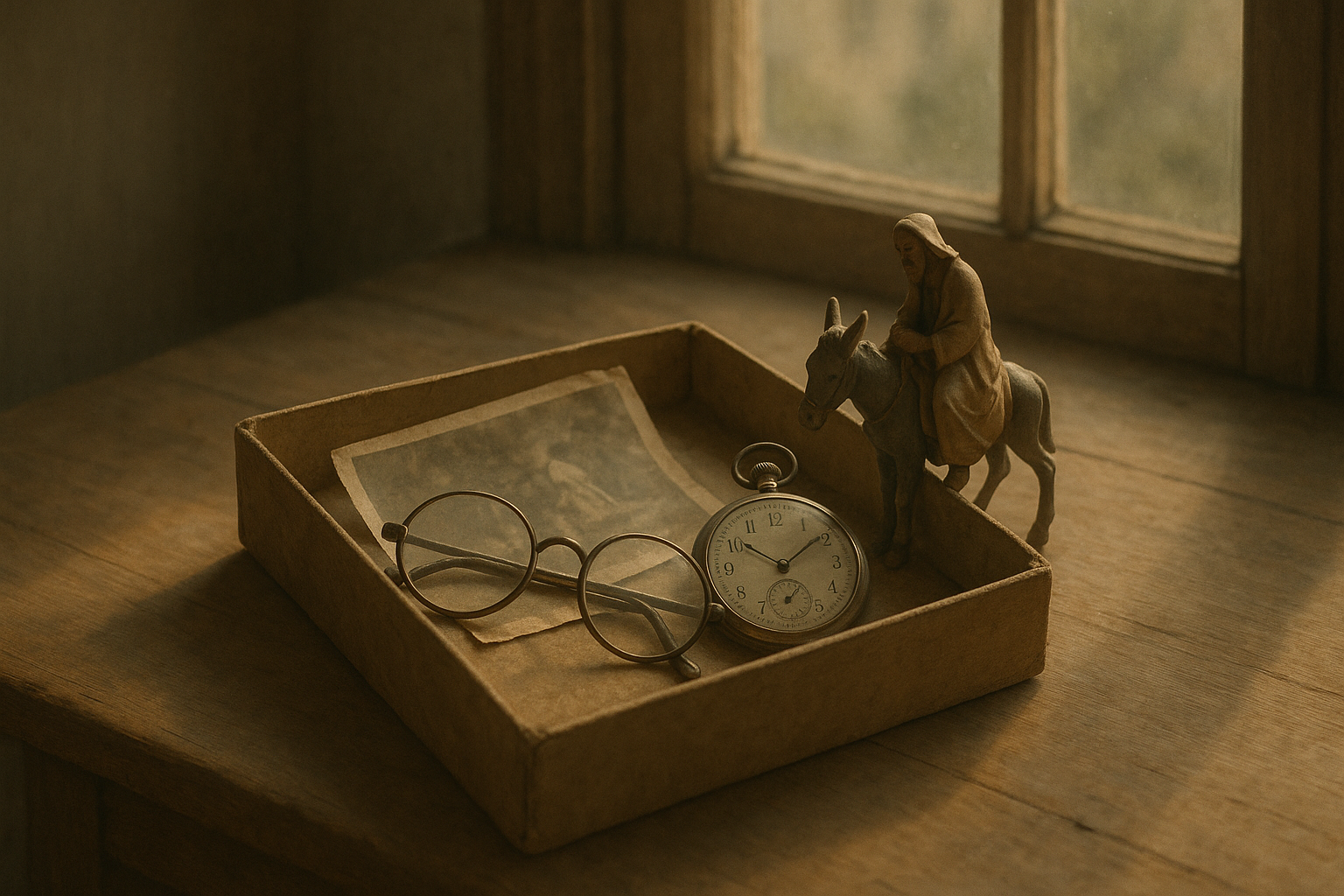
When my father died in Riverside, California, where I grew up, I asked my daughter, who lives in San Diego, if she would pack up his things, selectively. She generously consented to do so, and thereby saved me emotionally wrenching decisions in the immediate wake of his passing. I have many thoughts and memories of my father, who was the kind of guy you could always count on. But I doubt if I could have inferred that, or much of anything, from his artifacts alone. (Well, I could have inferred one thing: he had an eye for beautiful women. He had photos of the best looking women at the retirement home — staff, not other oldsters.)

A person I knew in DC was successful in business and in politics, and kept a careful record of all his accomplishments. He commented one day about the death of his grandfather, a prominent civic leader. All the awards and trophies, all the photos with notables, ended up in boxes on the sidewalk, waiting to be carted away.

I got interested in antiques several years ago, including small items to fill empty spots in large apartment I had just moved into. So I started going to estate sales. I found it strange, and questionable, to pilfer, as it were, the embodied memories of someone who has left them behind. One was a retired school teacher who had traveled widely in her later years. I picked up several things, including a little figure acquired in Turkey, of a famous sage who sits on a donkey, facing backwards, teaching his pupils who follow behind. Reflecting on it, I decided, no this is not ghoulish. She would be happy that things that meant something to her had found an appreciative home.

These random thoughts may not come to much. But there is something you might call “life-wisdom,” and it is acquired, in part, through ruminations wandering aimlessly.

Addiction and Manipulation: Victimhood, Agency, Sin, and Grace.

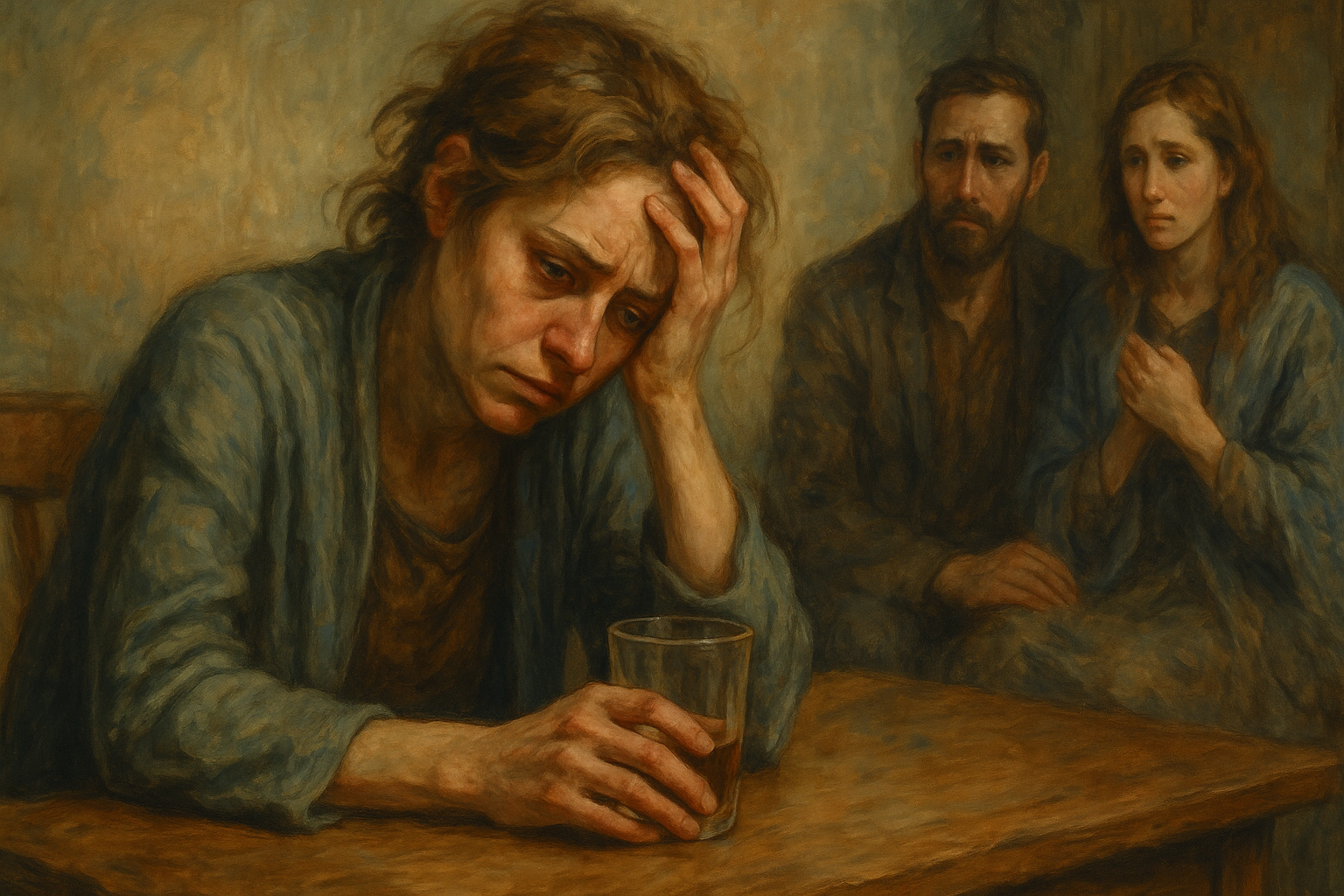
A friend contacted me about the following problem. She is related to a woman who uses her addiction aggressively to manipulate those around her. She asked what I think about this problem psychologically and theologically.

Psychologically, the woman has an addiction. Presumably, there are physical aspects to that. But she also has a psychological addiction, first to drink, more fundamentally to thinking of herself as a victim (including of those who most love her and offer help). And hence as having a right to be angry and to strike back at others (perhaps especially those who most love her and are most eager to help). She probably does not well love herself, doesn’t see herself as lovable, and hence sees those who love her as fools, especially if they let her take advantage of them, and therefore as contemptible.

Those who offer assistance and advice are her enemies, because, at the heart of her cherished victimhood is a sense of lack of agency. The one thing she can do is to hurt those who love her, and the weapon she wields is suicide. She can end it all and that will teach them! Let them live with the hurt and guilt (which, unfortunately, they are almost certain to feel) for the rest of their lives. How can a person decide to end her life? The character that defines a person has long since been emptied out by drink and fantasy victimhood and behaviors, ugly even in her own eyes, that break healthy ties to others and undermine self-respect. So the completely self-indulgent self ends up with no self worth perpetuating. There is nothing left to hold onto. What meagre shred remans offers less satisfaction than dramatically striking back through suicide. Psychological models tend to run aground here. Most of them are deterministic. Her troubles, they say, are the fault of a bad childhood, or of “society” (which, oddly enough, is spoken of as if it had agency, i.e., makes us do or think this or that, of which we are then victims).

So what do we say about all this theologically? For Christians (like my friend), the vital theological concepts are sin and grace. For grace to be operative, a person might well need to understand her own sin. And sin implies agency, free will, so the woman in question can’t go there, and those aspects of our culture that deny agency, including many in the helping professions, can’t go there. So her sin, as sin, remains unattended and unrecognized. There are many conduits of grace, but among them are the people who love us and those who, for humane reasons, want to be helpful. The nature of sin is that it does not want to be “helped.” The alcoholic does not want “help,” does not want even to recognize his or her condition, his or her “sin.” We can close ourselves off to grace: “inwardness with the door closed,” as someone called it. God sometimes breaks through extraordinary barriers – grace can reach the drunk with his face in the gutter — but the agile sinner can stave it off until it is too late.

Doesn’t Fit Our List

I was sending a proposal to academic publishers and discovered that the current language of rejection is, “doesn’t fit our list.” Can’t argue with that. An editor from one of the most distinguished wrote: “This is a wonderful project, and I enjoyed reading and thinking with your proposal.” Ooh-kay …

Abigail has sometimes received even more striking praise in letters of rejection, one saying, “I hope God doesn’t strike me dead for turning this down.” I have wondered if she should have written back, threatening divine retribution. I suppose calling down infestations and plagues has gone out of style.

High Middle Ages and Happiness

There was a historical period known as the High Middle Ages — a fitting term for the stage of life at which Abigail and I found one another.  I hoped we would have at least ten good years together before the hazards of life caught up with us.  As of January 20, it has been twenty-two years.  Recently, she reported – not just to me but to her acupuncturist and her favorite horse – that she was “happy.”  For her, it was an embarrassing confession.  Scholars and intellectuals NEVER say they are happy.  They are too smart and sophisticated for that.  And too deep.  Weighty thinkers are supposed to be full of existential dread and infinite angst.  She reports that, because her European mother was “happy” as a child, she was thought to be not too bright.  Charles de Gaulle was once asked by a reporter, “Are you happy?”  “Are you nuts?” the French leader responded.  (It sounded better in French.)  But my profound, brilliant, cosmopolitan wife reports herself as “happy.”  I was pleased for her, of course, but even more for what it seemed to say about me.  Although I am a rather lumpish husband, notorious for having been a poor date, who takes her nowhere and does nothing, and yet – thank God! – she is “happy.”  My Dad advised me way back when, “Make her happy and you’ll be happy.”  Thank you, Dad.

Alasdair MacIntyre RIP

My friend, Alasdair MacIntyre, died this year. I call him my friend, although our paths crossed only intermittently. I first met him, when he was speaking in Boulder. “I may be a member of the Moral Majority,” he told me. Well, I was too, in a similarly modulated way. Later, when After Virtue appeared on the cover of TIME magazine, I asked him whether he had been prepared for the celebrity. “Not at all,” he said, “not in the least.” But he took it in stride and it served him and his world audience well.

Alasdair owed me nothing. We had never been colleagues or in any other special relationship. Nevertheless, he offered a generous endorsement whenever I asked for it. A few years ago, as he was growing older, lest I leave something important unsaid, I send him a note thanking him for his many kindnesses.

He wrote back that he owed the greater debt to me. For what? For having shared my God experience with him. Though defending one set of philosophical battlements after another over the years, he came, before the end, to have an open soul. God bless him!